





















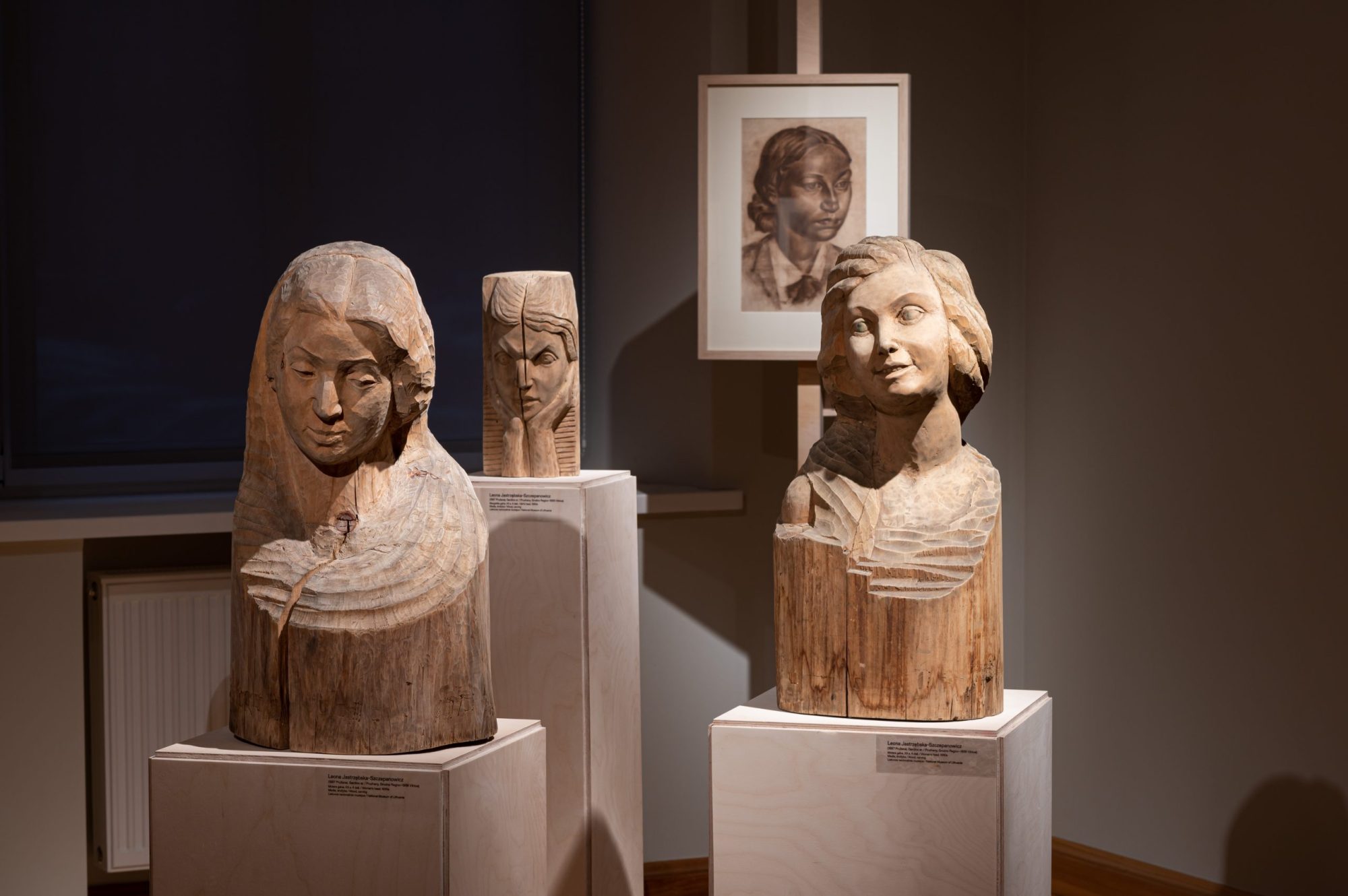
The aim of the exhibition is to put in the limelight a unique but little familiar segment of interwar Vilnius art – the results of artistic activity of women of different generations, nationalities and social layers who worked in Vilnius. The stylistics of their works varies from realistic expression typical of the early 20th century to modern examples of art deco and expressionist art. In the exhibition, women artists’ work is presented through six thematic sections: A Framed Gaze tells about portraits and self-portraits created by women, Home Territories offers a behind-the-scenes peek at their home environment, Spaces of Dreams and Anxiety take us to the realm of socially and emotionally sensitive experiences from poverty to buffoonish circus performances, Revelations of Traditional Culture introduce the field of ethnic culture research and knowledge, In the Rhythm of Stylish Life draws attention to the search for modernity and popular and theatre culture of Vilnius of that time, and Art Pilgrims illustrates the subject of women artists’ trips. Women artists’ migration (the majority of them were not natives of Vilnius), just like education issues, in one or another aspect is related to all the chosen thematic sections. Short biographies of the most distinct artists or, on the contrary, creators who have been left outside the history of art, are provided. These brief narratives reveal intriguing details and reiterate the multi-faceted character of the Vilnius art scene in the interwar period.
On display are artworks, photographs and documents from nine memory institutions of Lithuania: museums, archives, libraries and four private collections. The exhibition presents sixty women artists and includes 52 paintings, 10 sculptures, 58 prints and drawings, 37 photographs, 40 archive material (documental photos, objects, magazines), and 8 ethnographic objects. The visuals of the exhibition is supplemented by sound recordings and video footage. Some works updated with more specific attribution are presented to society for the first time after almost a hundred years.
Algė Andriulytė, Ilona Mažeikienė
Organisers: Lithuanian National Museum of Art, Vilnius Academy of Arts
Architect Eglė Matulaitytė, Processoffice
Designer Liudas Parulskis
Project is funded by Lithuanian Council for Culture
Media sponsors: Lithuanian National Radio and Television, JCDecaux


