Skip to content
Prano Domšaičio galerija

Prano Domšaičio galerija

Ekspozicijos

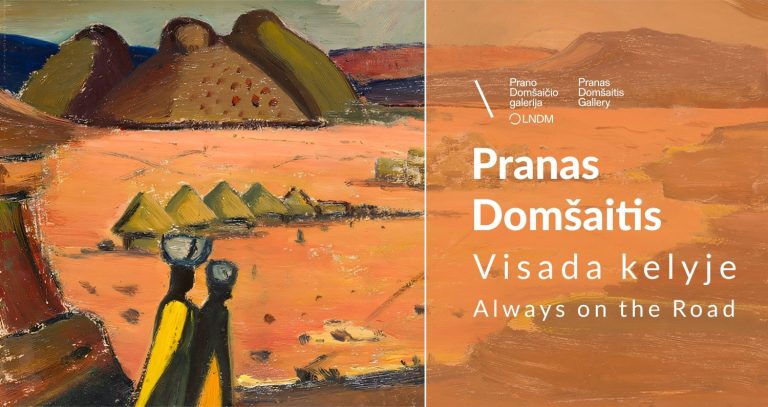
Pranas Domšaitis. Always on the Road

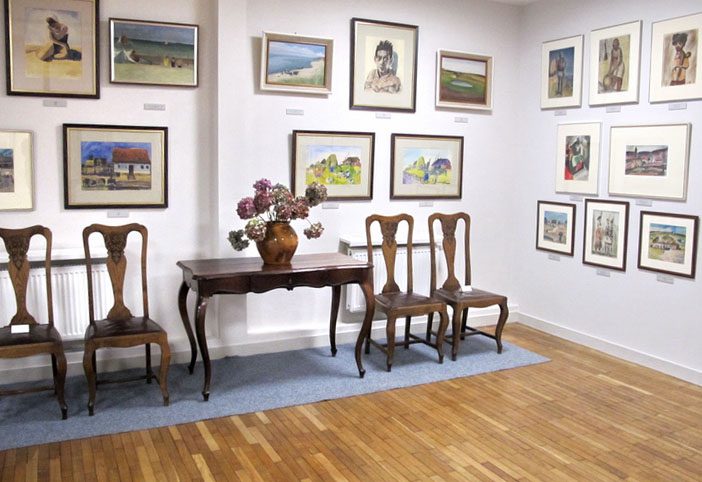
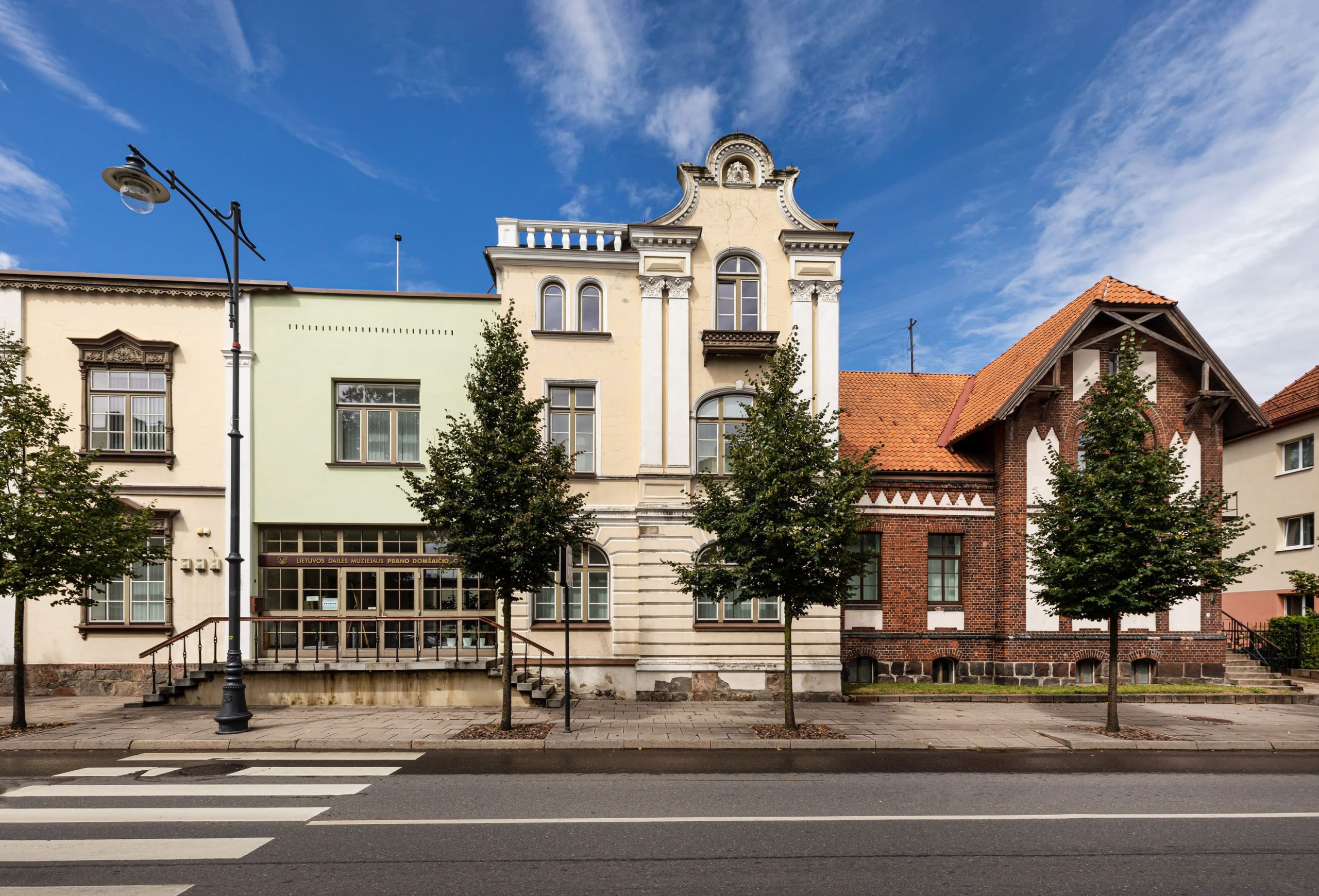
The renewed display brings the content closer to contemporary visitors    The visitors to Pranas Domšaitis Gallery will be able to see around two hundred of the artist’s pieces: oil paintings, water colours and pastel works, drawings, embroidery compositions and two-side pictures set in special structures. The display is organized both chronologically and thematically.   Visitor-experience in the gallery will be heightened by contemporary approach to museum space.   ‘The renewed exhibition of Domšaitis is enhanced by the integrated multimedia elements tailored to visitors in different age groups and of different experience. The museum seeks to create innovative products of lasting value as facilitators bringing the content nearer to contemporary visitors and leading into a deeper acquaintance with the art by Pranas Domšaitis. That will also add to the museum’s attractivity and inclusivity, the accessibility and dissemination of its content,’ Skaistė Marčienė, director of Pranas Domšaitis Gallery elaborates on their new solutions.    Over six hundred art pieces by Domšaitis were gifted to Lithuania by the Lithuanian Foundation operating in the US, which acquired the works from the artist’s widow, Adelheid Armhold. Thanks to the joint efforts of the organization and museum curators, the biggest part of the painter’s legacy is preserved at the LNMA. Since 2001, a part of his work is on permanent display in Klaipėda, in close proximity to the painter’s childhood’s home.   Born in Kruopynai, a small village in East Prussia (now Kaliningrad Region, Gayevo), the painter Pranas Domšaitis (1880 – 1965) is one of the most acclaimed representatives of the Lithuanian exile art. In 1907 – 1910, he studied painting at the Konigsberg Art Academy. His art was influenced by 20th-century European modern art and the dominant contemporary trends. In Germany, alongside with the popular at the time Impressionism, a new movement of Expressionism was taking shape. The budding artist was moulded through interactions with the established artists of the time. Already in 1914, Domšaitis visited Edward Munch, painter and graphic artist, and the trailblazer of Expressionism.   In Germany Domšaitis was famed as a creator of expressionistic landscapes and biblical compositions. He received substantial coverage by the cultural press, and his works were acquired by the National Gallery in Berlin, museums in Königsberg, Lübeck, Szczecin, and by private collectors. Petras Domšaitis exhibited in group shows alongside such celebrities of German art as Hermann Max Pechstein, Otto Dix, Ernst Ludwig Kirchner and others.   ‘The artist left for us a myth, an unusual, but also a wondrous world of dreams,’ these words by Telesforas Valius, an émigré graphic artist, epitomize the creative legacy of Pranas Domšaitis.   The internationally acclaimed artist Pranas Domšaitis: Lithuanian blood does not lie   With the German National Socialist Party’s rise to power in 1933, the altered political course influenced also the artists in Germany. The new government perceived modern art as worthless. The artwork by the Modernists was banned from the museum displays and moved over to the so-called Degenerate Art Exhibitions, which showed examples of unacceptable art.   Domšaitis, who was nourished by two cultures, German and Lithuanian, and established himself on the international art stage, would always emphasize his roots, saying: ‘Lithuanian blood does not lie, just like my pictures do not. They are Lithuanian for real.’  In 1920, in Kaunas the painter received a passport of the Republic of Lithuania, while around 1938, he started signing his work as ‘Domsaitis’, using a Lithuanian equivalent of his name.   In post-war Austria he met Lithuanian émigré artists and took part in the international war refugee exhibitions, for the first part, as a Lithuanian artist. The ties with the émigré community established here were to last for a life-time. In 1949, the artist, with his wife Adelheid Armhold left for South Africa. They settled in Cape Town where he soon was integrated into the local cultural life. He gave solo shows, represented the country at the San Paolo Biennial. In 1946, he won the South African Prize of the Artist of Fame and Promise.   Pranas Domšaitis Gallery invites its visitors on a journey   ‘The artist had once said that he “is always on the road”, referring to his constant changes of place and his creative explorations. As a curator working on a new display of Domšaitis’ art, I also felt like on a journey, exploring his biography and making selection of the artwork to go on show. I invite everyone to hit the road of familiarization with the painter’s art and with Domšaitis as an individual, a personality highly colourful and dedicated to art,’ Dr Aušra Trakšelytė shares her experience of curating the new exhibition.   Visitors to the renewed exhibition at the gallery will see the early work by the painter, the landscapes of Pomorze, Bavaria, Austria, of southern countries, colourful flower compositions, still lifes, portraits of the people of different countries and views of their everyday life, biblical scenes rendered in medieval mystical atmosphere, together with the most mature and powerful work of his late years.   The expanded new exhibition invites you and promises ‘a magical opening of reality’ to quote Pranas Domšaitis himself.   Exhibition curator: Dr Aušra Trakšelytė   Exhibition architect: Vladas Balsys   Graphic designer: Laura Grigaliūnaitė   Coordinators: Skaistė Marčienė, Aurelija Malinauskaitė   Lithuanian language proofreader: Laura Patiomkinaitė-Čeikė   English language translator: Aleksandra Fominaitė   Audio-guide text writer: Algė Gudaitytė   Media partners:          Project financed by Purchase an e-ticket for this exhibition Book a guided tour of this exhibition by phone +370 46 410 421, email domsaicio.edukacija@lndm.lt Plan your visit to the Pranas Domšaitis Gallery 
More about the exposition
Archive

Permanent exhibition of Pranas Domšaitis Art Works

Artist Pranas Domšaitis (Franz Domscheit) was well known in Germany after World War I and in South Africa after World War II. But it has been only in recent decades that the Lithuanian public learned more about him when the bulk of his creative output came under the guardianship of the Lithuanian Foundation /USA/. Domšaitis, from childhood maturing in the blend of neighboring cultures, is a classic artist of the borderlands. He absorbed international influences, yet he maintained a strong national identity. In one letter Domšaitis spoke about his ancestry: ‘But Lithuanian blood does not deceive, just as my paintings are truly Lithuanian. ‘ Until the age of 27 Domšaitis lived in his birthplace where he began his creative activity as a self-taught artist while he helped his father tend the family farm. Trough the intercession of famous German artist Max Liebermann, Domšaitis was accepted to the Konigsberg Art Academy (1907). At the beginning of his creative path, Domsaitis was influenced by German artists. Domšaitis experienced a very strong impact from his visit to Edward Munch in Norway. Domšaitis was similarly affected by the French expressionist Georges Rouault, especially in religious themes. His first exhibition in the Gallery Ferdinand Moller in 1919 attracted critical attention and his works began to be added to various collections in Konigsberg, Stettin and Lubeck, and the National Gallery in Berlin acquired an ‘Adoration’. During 1921–1937 he participated in group exhibitions in Germany (Berlin, Essen, Hamburg, Konigsberg, Breslau, Stettin, Munich), Austria, Switzerland, Romania and Turkey. When political and social conditions changed in Germany, the time of creative enthusiasm and stability came to an end. In 1937, there began throughout Germany the confiscation of art works that did not conform to the values of the official ideology. The final accent was an exhibition opened in Munich in the summer of 1937 under the name Entartete Kunst (Degenerate Art). Domšaitis shared with Nolde, Kirchner, Muller, Dix and others, the most important artists of the day, the miseries and honor of having his work in the exhibition of ‘Degenerate Art’ in 1937 in Munich. It was thereafter impossible for Domšaitis to exhibit further in Germany, and began 1938 he sometimes lived at Vorarlberg, Austria and signed his picture from that time onward with his Lithuanian name – Pranas Domšaitis. In 1946, he participated in a refugee exhibition in Bregenz, the first time his work was represented as Lithuanian. In 1949, his wife was appointed the senior lecturer in singing at the University of Cape Town in South Africa, a country, he had dreamed of as a child. New landscape, new color, made Domsaitis final South Africa period a time of renewal and confirmation as his art grew simpler and even stronger in design. His painting took on a melancholy stillness and transcendental premonitions. His landscapes, common human figures are filled with deep symbolism. Especially important is the deeply experienced archetypes of his work – the journey and the themes of traveling – expressed realistically as well as expressions of Biblical studies. This late breakthrough in the artist’s creative powers amazed South African art critics, who were being invited each year to several personal exhibitions of Domšaitis’ paintings. In 1964, Domšaitis received, for his achievements in the field of artistic creation, one of the most prestigious South African awards – the Artists of Fame and Promise Award. Domšaitis died in Cape Town in 1965 at the age of 85, and in 1966 the National Gallery in Cape Town held a memorial exhibition of over two hundred of his works which later was shown in other museums in South Africa. It is fortunate that the harvest of Domšaitis long creative growth, which matured in foreign lands, in large part has returned to the area of Lithuanian art. In 1989, when Lithuania began his journey to independence, the Lithuanian Foundation transferred the first of Domšaitis works to Lithuania. In the course of several years, the Foundation donated a collection of 528 of artist’s works to the Lithuanian Art Museum. On July 26, 2001 the Pranas Domšaitis Gallery was opened in Klaipeda. It is home to the greater part of the collection as well as to the Pranas Domšaitis Culture Center, whose goals are to collect, study and disseminate information about the artist’s life and work. Although the collection held at the Lithuanian Art Museum (Domšaitis Gallery is the branch of Lithuanian Art Museum) is the largest in the world, it is not the only one.  There are paintings by Domšaitis at the – M. K. Ciurlionis National Museum of Art (Kaunas, Lithuania); Lithuanian Foundation, Lemont, IL, USA; East Prussian Land Museum, Luneburg, Germany; East German Museum–Gallery, Regensburg, Germany; National Gallery, Berlin, Germany; National Gallery of Zimbabwe, Republic of Zimbabwe; South Africa Republic – South Africa National Gallery, Pretoria Art Museum, Johannesburg Art Gallery, Durban Art gallery and many others… Many of Domšaitis’ works are held in private collections in Southern Africa, Germany, Austria, Canada, Australia, the United States, Turkey. Unknown is the fate of those pictures which the museums and galleries of Lubeck, Munich, Hamburg, Stettin, Breslau, Hannover, Konigsberg acquired before World War II. “Ich bin doch immer unterwegs” (“I am always on the way”) – these words spoken in German by Pranas Domšaitis on his deathbed are constantly repeated by most of the authors who write about this son of Lithuania. These last word of the artist may be used to characterize his creative path, marked by an intensive search for perfect expression, the only path that gave a tangible result – a spiritual and material legacy attesting to this man’s existence on earth. Domšaitis was an artist brought up by the cultures of two peoples living next to each other – the Germans and the Lithuanians.
More about the exposition

Archive

Permanent Exhibition of Vytautas Kašuba Works “The Human Mystery”

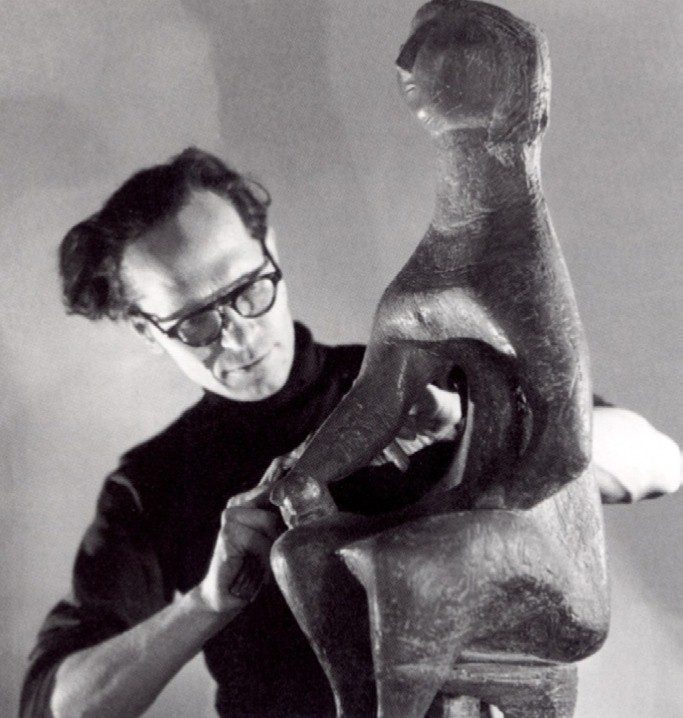
The exposition entitled The Human Mystery presents the works of famous Lithuanian emigration sculptor Vytautas Kašuba (1915–1997). V. Kašuba was born in 1915. After some training at Juozas Zikaras’ studio, V. Kašuba was admitted to the second year course at the School of Arts in Kaunas. The extraordinary skills of V. Kašuba quickly became obvious. During the preparation for the 1937 Paris World’s Fair, he helped sculptor Juozas Mikėnas and artist Jonas Prapuolenis to create their works. Vytautas Kašuba being a second-year student himself won silver and gold medals for wood carvings in the fair. Soon he was asked to create the figure of Vytautas the Great for the Lithuanian exposition at the 1939 New York World’s Fair. V. Kašuba graduated from the School of Arts in Kaunas in 1939. Due to the approaching front line, V. Kašuba and his future wife, Aleksandra Fledžinskaite, fled to the West in 1944. After spending some time in Germany, the Kašuba family emigrated to New York, the USA. From 1953 to 1969, V. Kašuba created approximately 30 religious works, round and relief sculptures, Stations of the Cross in churches and convents in Chicago, Boston, New York, Washington and many other places in the USA. After being asked to decorate the Vatican Pavilion at 1964 New York World’s Fair, V. Kašuba made a very original decision to create relief panels of Saint Scriptures. He used the hammered lead (repoussé), a technique employed in the Middle Ages, but unknown in America. The most important works of this period are the monumental relief panels: the bright major tonality is felt in Day by Day (1984–1988), the bronze wall Journey (1984) and a diptych of cast stone panels, The Journey of Existence (Spaces of Fate and Foreign Shores, 1984–1987). The diptych The Journey of Existence can be called the apex of sculptor’s creativity. This work represents the drama of human life, develops the idea of the journey which creates a connection between the individual and the eternity. V. Kašuba visited Lithuania for the first time after the World War in 1974. After the return to America, he created a set of medallions with the great dukes of Lithuania and some medals. V. Kašuba gradually decided to give his works to the homeland as a gift. The first collection of sculptures and reliefs was sent to the Lithuanian National Museum of Art in 1987. In 1992, the sculptor won the sculpture contest to build the monument for Gediminas, the Lithuanian Great Duke. The monument was opened in Vilnius in 1996, a year before the death of V. Kašuba (1997). After the death of a sculptor, his wife Aleksandra Kašubienė, who was an artist as well, sent more of his works to Lithuania. Now the Lithuanian National Museum of Art keeps more than 240 sculptures, lead, bronze, cast stone, plaster reliefs, approximately 20 medals and 200 drawings. The works of Vytautas Kašuba are well known and appreciated in Lithuania. They are, too, kept in museums, public and private collections, churches and convents in the USA, Canada, Japan, and Lithuania. The presbytery of the Church of Resurrection in Kaunas was decorated with the high relief created by Vytautas Kašuba, Crist Risen (1965), in 2012. It is one of the most mature sculptor’s religious works which was transferred from the closed Recollection House of Calvary monks.
More about the exposition

Naujienlaiškio prenumerata

Veiklos ir paslaugos

Apie mus

Siekiame tapti įkvėpimo šaltiniu, kuriančiu bendravimo, emocinės gerovės, savęs ir pasaulio pažinimo aplinką. Tikime, kad menas yra vertybė, turinti didžiulį edukacinį potencialą, teikianti pažinimo džiaugsmą ir gyvenimo prasmės suvokimą.

logo

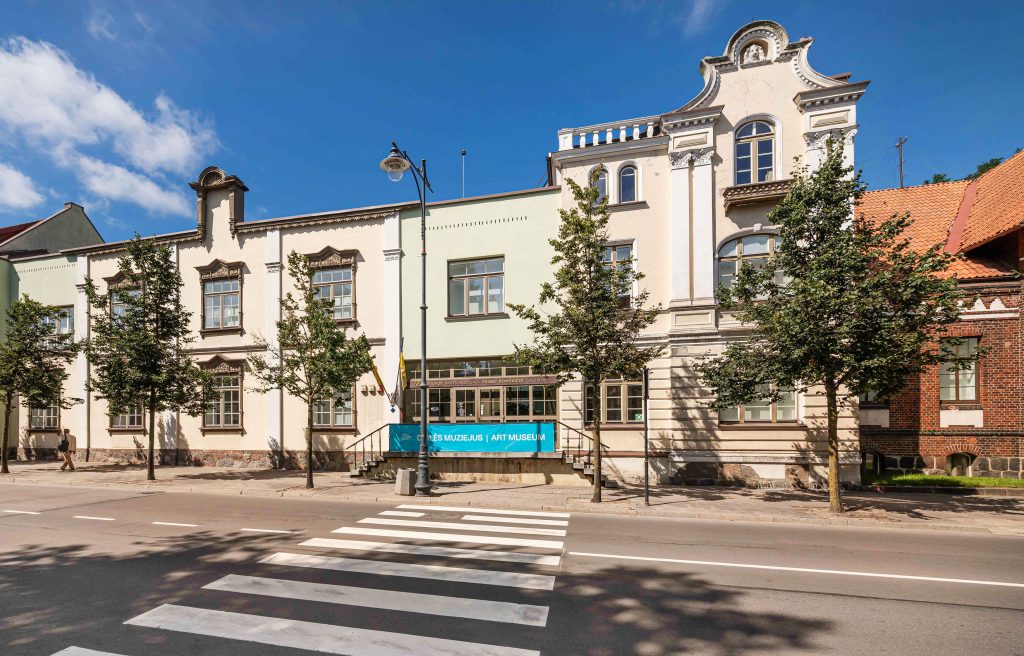
Apsilankyk Prano Domšaičio galerijoje

Bilietai
Logo