























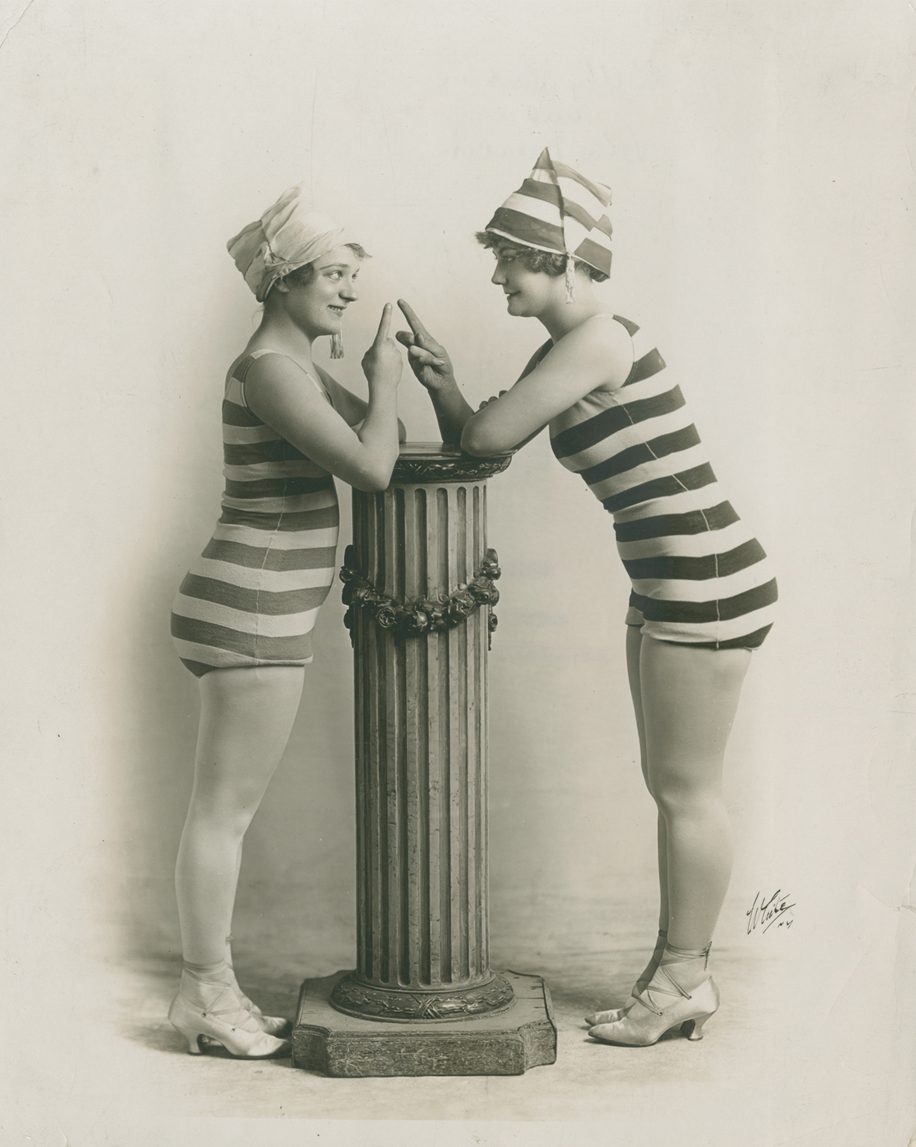
Woollen knitwear swimsuits only started to become popular in the early 20th century, often adorned with horizontal stripes. These swimsuits made both sexes more equal – men would never swim bare-chested, as it was considered indecent.
Changes to the appearance of the swimsuit came with the First World War and the emancipation of women. Swimsuits started to become narrower, more attractive and, as opposed to their precursors, would not put additional kilograms on the ladies. Swimsuit contests began taking place during the 1920s, as the swimsuit ensemble saw the addition of tights, caps and swimming slippers. However, having a suntan was becoming trendy, and therefore the design of the swimsuit became simpler. Unisex beaches began to appear – many consider the first one to be the Florya beach in Constantinople established by Russian emigrants.
Towards the end of the 1920s, Elsa Schiaparelli popularised the bell-bottom beach trousers, while Russian emigrants Mary Nowitzky and Sonia Delaunay were considered the most luxurious designers of Art Deco style swimsuits. Even film stars began to pose for photographs in swimsuits! The first dedicated female swimsuits appeared in the 1930s and were often made of percale. Later on, the trend of swimming trunks and Bermuda shorts came in from America. After the war, swimsuits that emphasise the female figure became preferred and began to include plastic cups, while with the hippie movement that shook the world in the 1960s, it became acceptable for women to swim and sunbathe without the top of the swimsuit!
Today, many fashion houses offer swimsuits decorated with flowers, chains and colourful glass beads. They can be boundlessly luxurious and pricey. This exhibition is dedicated to the history of the early retro-style swimsuits. It will reveal the fascinating evolution of the swimsuit, without which beach fashion would be unimaginable.


