























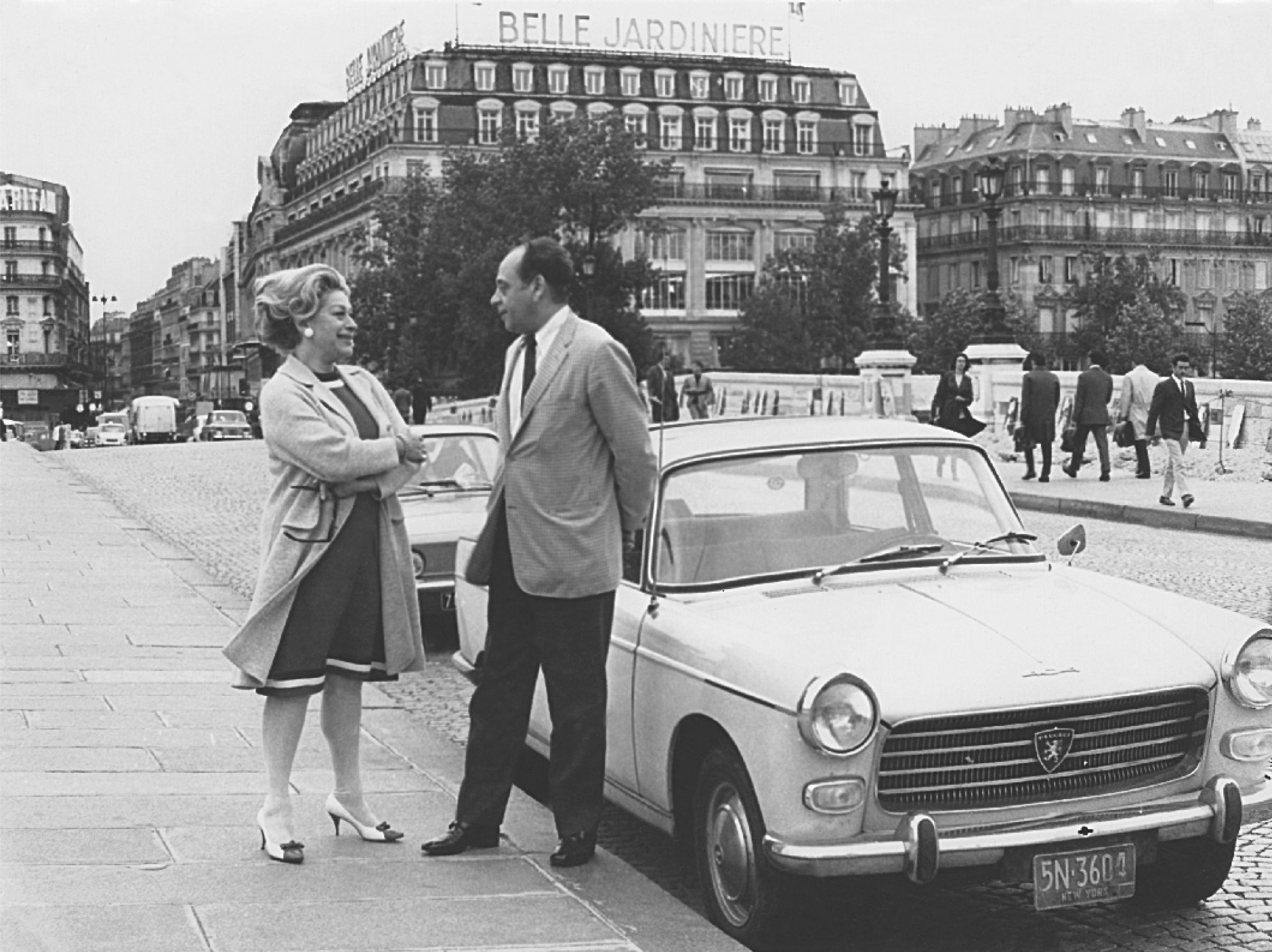
With Regina Resnik. Paris, 1974
This Litvak artist, more so than others of his background, found the philosophical reflections of the 20th-century French anthropologist and aesthetic theoretician André Leroi-Gourhan on the domestication of time and space, or their “taming”, to be very close to his heart. The author likened them to humanisation, relating them to the individual. In this way, abstract time and space took on the human dimensions of time and space. Reaching maturity in independent Lithuania and diving right into Lithuania’s cultural life, as a youth Arbit Blatas had the opportunity to see and experience the artistic life of Germany and Paris from up close. With the outbreak of World War II in 1939, he was forced to flee to the United States where he discovered a new space conducive to creating art, not to mention the numerous like-minded thinkers. Everywhere he went, he felt as if he were among friends. Post-war New York, Paris, Céret and Roussillon, Venice, Hamburg, Warsaw and other cities around the world that welcomed the artist’s creative experiments were full of symbols left there by the charismatic Arbit Blatas.
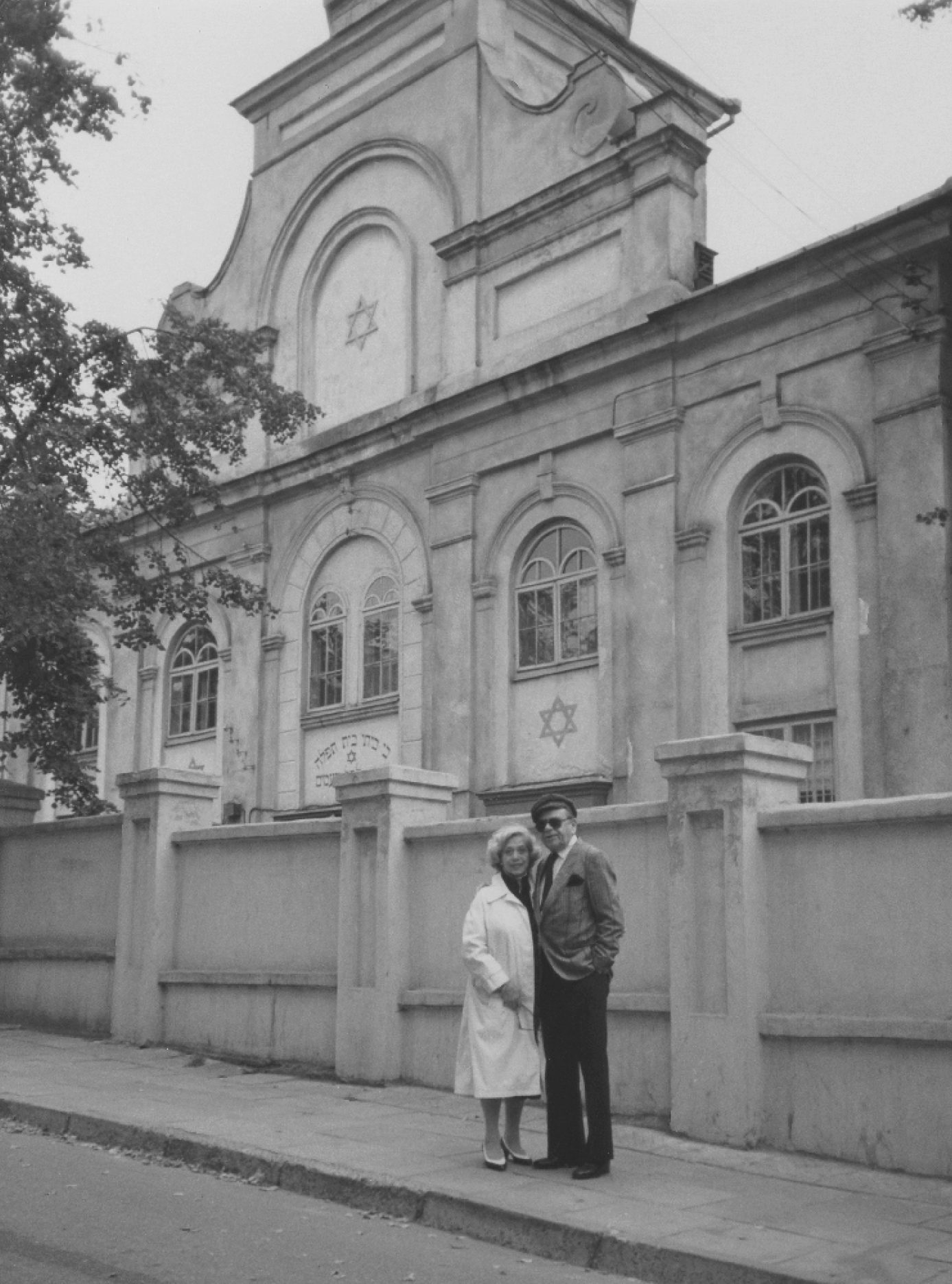
Prie Kauno choralinės sinagogos. 1988. Fot. Gregory Talas
The artist did not avoid Western cultural trends and participated in important art movements, yet he did not blindly follow or try to keep up with short-lived fashions, never really feeling the need to break through into the front lines of the bohemian avant garde. This was all testimony of a self-confident individual with a strong sense of determination, who had a firm understanding of his goals. Naturally selecting art forms that he held close to his heart, over time a very personal and intimate creative narrative evolved. This is evident from the immensely rich artistic legacy Arbit Blatas has left us with: canvases painted in oils, gouache and pastels, series of lithographic prints, his sculptures, drawings, poster designs, opera stage designs, film scenarios, etc. The artist worked easily and quickly, he was a diligent and determined character. Amid the most difficult moments in work and in life, he was always rewarded by his friendly nature and positive attitude.
The main purpose of this book is to unveil some of the as yet unknown facts from Arbit Blatas’ biography and his work, to acquaint readers with the rich new visual material at hand, to review some of the lesser-known Western art criticism positions and contexts and to discuss the artist’s public activities in seeking to incorporate Arbit Blatas’ creative oeuvre into a more active discourse on contemporary Lithuanian art research.


