












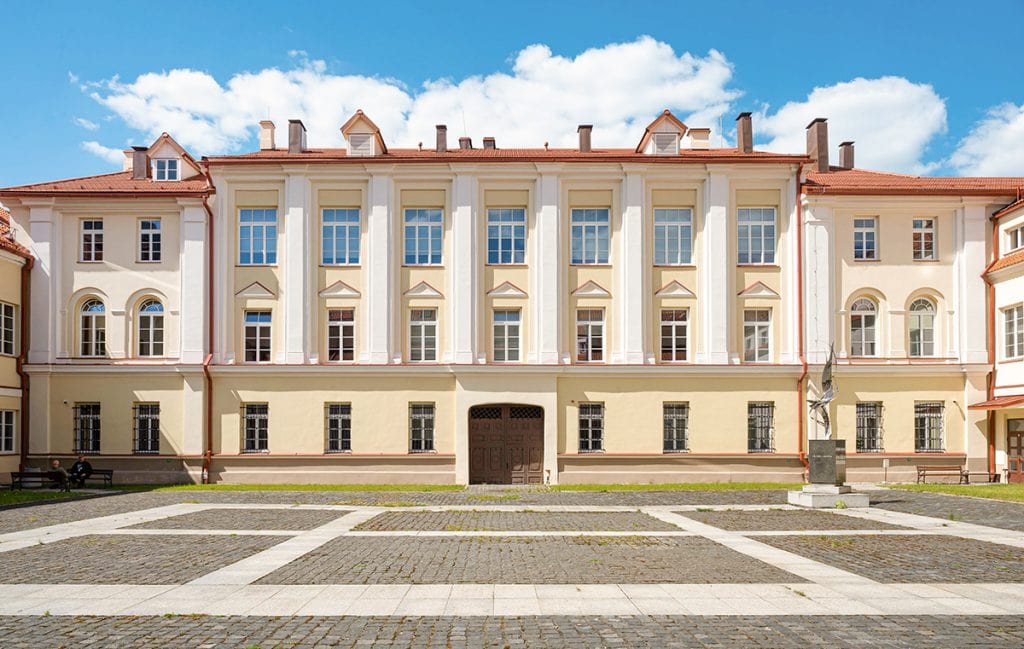










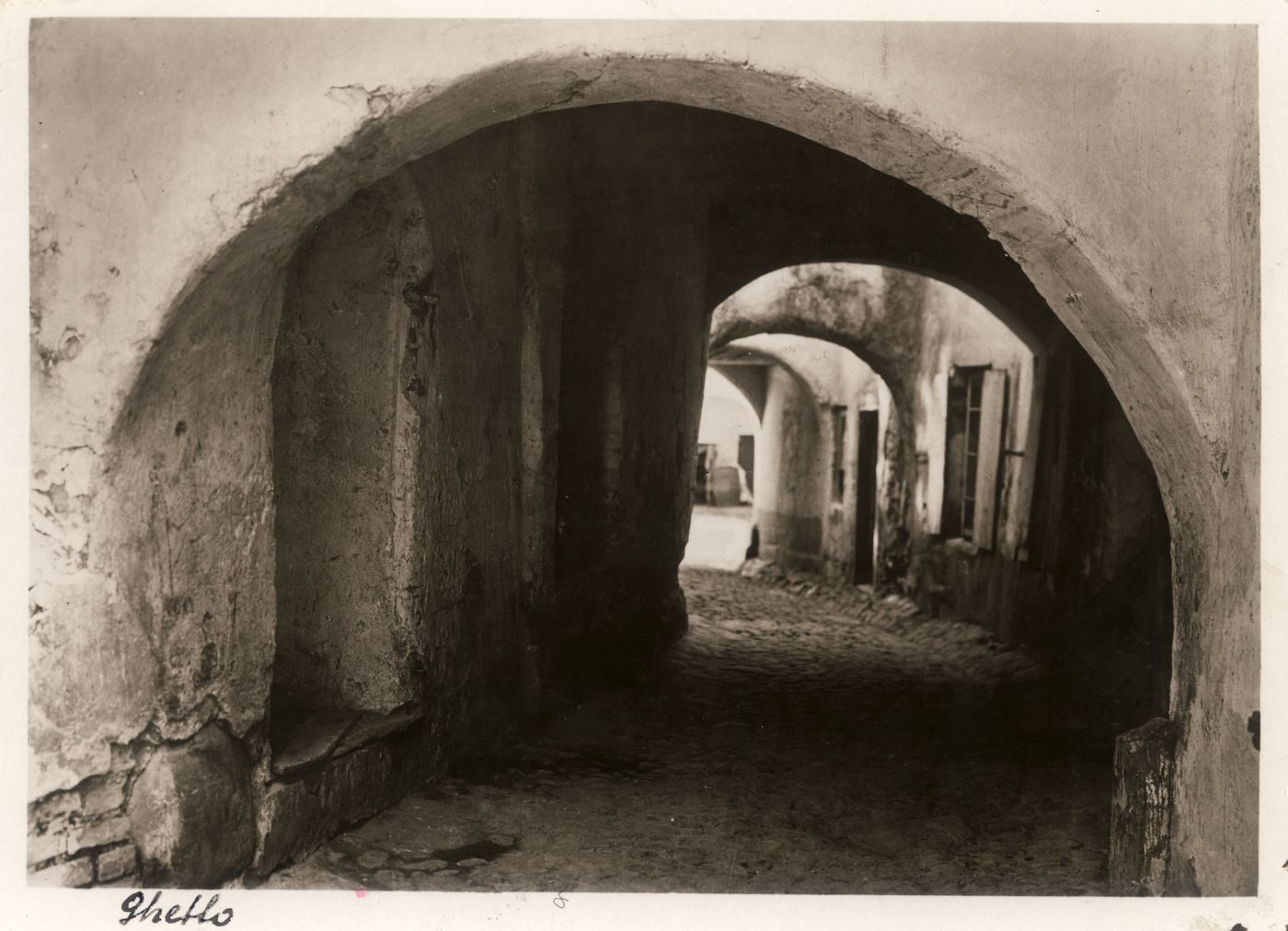
In the 15 photographs selected by the curators of the Lithuanian National Museum of Art collections, we see the faintly illuminated streets and architecture of the Jewish quarter established in Vilnius back at the beginning of the 17th century; people are visible in barely two images. Jan Bułhak’s choice of employing an empty quarter depiction strategy, whether consciously or intuitively, proved to be hauntingly prophetic: after the Holocaust that ravaged the Vilnius Jewish community during the World War II years, people had truly been erased from this neighbourhood and these streets. The community numbering around 60 thousand people was simply swept off the face of the earth, traces of its memory were earnestly destroyed. One of the most painful losses was the Great Synagogue of Vilnius, the centre of spiritual life in Vilnius – the Jerusalem of the North – having suffered severe damage during Nazi Germany’s bombing raids, was totally demolished upon Stalin’s orders well after 1945, a kindergarten of repugnant architecture being constructed at the site in a final act of cynicism. The densely inhabited territory surrounding the former Great Synagogue – Jewish Street and its courtyards, this enigmatic atmosphere which drew the talented Jan Bułhak’s attention, underwent radical transformation. Those living in this territory today are largely not even aware that the community and cultural life of the Vilnius Jews was still thriving in their neighbourhood just a little over 80 years ago, while the city itself was considered the undisputed capital of the East European Jewish religious world.
Jan Bułhak’s photographs and the images of the destroyed world of Jewish Vilnius captured therein resonate with current events unfolding today. Having fled from Europe after the terrors of the Holocaust and founding their own state with immense persistence and creative enthusiasm, today, in the third decade of the 21st century, Jews are again exposed to violent acts towards them, to anti-Semitic attacks even in states calling themselves democratic. Have the lessons of history actually been learned? Or must we despondently echo Antonio Gramsci’s thoughts, that “history teaches, but has no pupils”.
Dr Arūnas Gelūnas, Director General of the Lithuanian National Museum of Art


